Even now, nearly thirty years since it was designated as a new town, the adjective of "new" seems to attach itself naturally to every aspect of the city and its environment.
Yet Milton Keynes is actually a very mature and a very varied place. For example, hand axes from the Old Stone Age (ie. nearly 10,000 BC!) period were found in Fenny Stratford. And it is possible that Howe Park in Tattenhoe is a surviving fragment of the primary woodland that developed over the whole of Britain after the last ice age 11,000 years ago. Pick your historic period and some aspect can be found within the "new" city and there is only one-way to find these; the Redway system.
Extending for over 250 kilometres the Redway will take you into most parts of Milton Keynes. Use it to observe and explore the various stages of the city's growth.
As you travel about notice the way design has been used to give each district its own individual identity. At Coffee Hall and Netherfield, constructed in the 1970s, the dwellings were constructed using prefabricated building technology. Neath Hill, designed by Wayland Tunley in 1974 was greeted as a resurgence of the townscape movement in housing layout.
VEnergy efficiency has also become a priority in Milton Keynes. At Shenley Lodge, a large number of houses designed to be energy efficient can be seen. At Kents Hill, 36 futuristic houses that incorporate homeworking or "telecommuting" in their design are featured.
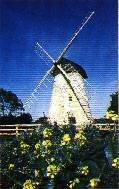
At Bancroft you will find remains of a first century Roman villa discovered in 1971. Just a short distance from Bancroft you will find the Bradwell Windmill, built in 1815.
isit the site of the Homeworld exhibition - a type of "ideal home show", set up in the 1980s to persuade house builders to innovate and create a wider variety of housing and so attract more people to Milton Keynes.
Then go to Willen and the Peace Pagoda. Erected in 1980, the story of Buddha is exquisitely etched on the surrounding frieze. Or why not Campbell Park, Britain's largest sculpture park where such treats as "Metropolis" by Robert Keonig are permanently on show. While you are there, look for the plaque erected to honour Lord "Jock" Campbell, the first chairman of the Milton Keynes Development Corporation. The inscription reads, "Si monumentum requiris, circumspice". (If you seek a monument, look about you.)
The Redway is more than a clever means of separating walkers and cyclists from the dangers and pollution of motor transport. A vast world of art, heritage, nature and sheer good fun is readily accessed via Milton Keynes unique cycle and pedestrian system. Discover ideas for day trips, special events and local walks at the Milton Keynes Tourist Information Centre. Whether you're visiting perhaps for a day or longer, or if you're a resident who'd like to know more about your city, drop into the Milton Keynes Tourist Information Centre, located in the Food Centre on Secklow Gate East. While you're there you can pick up books, handy maps and unique Milton Keynes souvenirs. Alternatively call the Information Hotline on .

The information above was reproduced from the Redway guide. A complete map with all the sites to see in the area. These are available from the Tourist information Centre, many newsagents and CoBR members in the area. We are pleased to advise cyclists who may intend to visit the area that there are 3 CoBR members in the area. For further information regarding these stores click on the relevant button.
|