| Welcome to all New Cyclists |
The casual cyclist is often overlooked as most commercial websites strive to sell main cycle brands to the racing, touring or commuting cyclist.
Here at e-cobr we try to cater for all types of cyclist and therefore have pleasure in presenting this section to you.
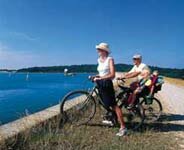 We appreciate that to you cycling is not an activity that occupies every waking hour. Instead you probably like nothing better than a pootle down to the local lake or your favourite pub on a sunny Sunday afternoon with the family and friends. We appreciate that to you cycling is not an activity that occupies every waking hour. Instead you probably like nothing better than a pootle down to the local lake or your favourite pub on a sunny Sunday afternoon with the family and friends.
So, what's this section all about? Well we're still trying to sell you things but here we will try to explain the reasons behind why a particular product will help your enjoyment of cycling.
We will also attempt to dispel a few myths along the way as to what you should and shouldn't wear or have on your bike.
To help you further e-cobr have actually produced a complete website for the new and returning cyclist. It is called "New to Cycling" and can be visited by clicking the link.
Part 1 - the bike. (We'll work on the assumption you already have it.)
If it is what is referred to as a mountain bike and has knobbly tyres; unless you intend doing all your cycling off-road, change your tyres to either slick or semi slick tyres. The latter have a slick centre ridge and knobbly bits on the side which are advantageous on those occassions you are off road.
 Whilst there is no real protection against the dreaded puncture. There is a product that can help seal inner tubes in the event of many punctures. The product has an unfortunate name "Slime" but works well for all but major inner tube failures. Whilst there is no real protection against the dreaded puncture. There is a product that can help seal inner tubes in the event of many punctures. The product has an unfortunate name "Slime" but works well for all but major inner tube failures.
The best protection of all against puncture is to be prepared by carrying at least one spare inner tube and a means by which you can inflate it. You'll also need tyre levers.
 Therefore check the links on the right for inner tubes, tyre levers, trail and track pumps or my personal favourite a trail pump with a CO2 gas cyclinder. You should also check out the natty little bags into which you can carry your tubes etc. Therefore check the links on the right for inner tubes, tyre levers, trail and track pumps or my personal favourite a trail pump with a CO2 gas cyclinder. You should also check out the natty little bags into which you can carry your tubes etc.
On most of your rides you'll never use the contents of the bag but you'll be glad I told you to carry one on the day you get that sinking feeling we all hate.
MTB Guards and mudguards are advantageous when its wet. These protect both your clothes and your bike from the worst of the conditions. In particular preventing that black streak of mud down the middle of your back!
If you ride where there are people walking, a bell is useful as it saves you having to keep asking to go past in your politest tone of voice, something I have to admit I've never really mastered ;-)
 A cycle computer fitted on your handlebars is a great little extra for your bike. Not only will it tell you how fast you're going but how far you've been and at what average speed. It also tells you how long you've been riding and what time it is. Unforunately they can't pedal for you though. A cycle computer fitted on your handlebars is a great little extra for your bike. Not only will it tell you how fast you're going but how far you've been and at what average speed. It also tells you how long you've been riding and what time it is. Unforunately they can't pedal for you though.
Saddles tend to be a very personal thing, some like thin, razor types other prefer sprung, well padded. If you are a woman make sure your saddle is women specific. Yes saddles are sexed. Women are built different and therefore need suport in different places.
 Finally, please look after your bike. I'm only talking about regular cleaning and lubrication of your chain and other moving parts plus nuts and bolts. There are numerous lubrication products on the market and our recommendation are the types that dry and have Teflon as opposed to oil which leaves horrible marks on your clothing as it not as effective. Finally, please look after your bike. I'm only talking about regular cleaning and lubrication of your chain and other moving parts plus nuts and bolts. There are numerous lubrication products on the market and our recommendation are the types that dry and have Teflon as opposed to oil which leaves horrible marks on your clothing as it not as effective.
We have lubricant made specifically for us by a company that produces products for the top European racing teams that you see in the Tour de France!,
Part 2 - you
..... and we know you don't want to look like a cyclist and therefore no, or minimal lycra? That's the black shiny stuff cycle shorts are made from.
When cycling gets painful, where does it hurt? If the answer is everywhere, don't worry it'll get easier. The fact is our bodies were never really designed for cycling and therefore they have to get used to the different way you are making it work.
Apart from the aching muscles, there are always three places where you are likely to feel the 'pains of cycling' first. We call these the cycle contact points. The three contact points are your hands, feet and bum!
Lets start with the hands.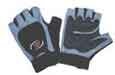
The hands can be supporting some of your body weight and certainly feel the road bumps and vibrations the most. If your bike has front suspension it will be easier on the hands. However to make it even easier consider purchasing a pair of cycle specific mitts or gloves.
Benefits of gloves and mitts.
They cushion your hands against vibrations.
They protect your hands in the event of a fall.
They protect your hands from damage by the undergrowth.
They keep your hands warm if it turns chilly or wet whilst you are out.
Your bum
Probably takes most of your body weight particulary as a casual cyclist tends to adopt a more upright position.
 If you don't mind lycra, cycle specifc shorts, complete with padding, offer one of the best forms of protection both against bumps and the possibility of chaffing. If you don't mind lycra, cycle specifc shorts, complete with padding, offer one of the best forms of protection both against bumps and the possibility of chaffing.
For those who prefer to wear their own form of shorts, or more normal clothing, you can purchase padded underwear that offers a similar degree of protection from vibrations and chaffing yet don't make you look like a cyclist.
Your feet
Any form of foot covering is OK for casual riding but if you want to make riding just a little easier, cycling specific shoes should be considered. You'll be pleased to know that there are many cycling shoes that look like trainers for when you go into the pub for your well earned drink.
Cycle specific shoes have stiffer soles than shoes or trainers. The reason they work is that when you press down on the pedals the power you are exerting goes straight into moving the bike forward rather than squashing the soft rubber that constitutes a trainers sole.
and finally - your head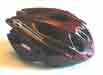
You may wonder why we're not doing a huge splurge on the safety of cycle helmets, the reason is quite simple. Whilst there are for's and against's, which are documented and discussed on many websites, until wearing helmets is made compulsory, if it ever is, we believe that wearing a helmet should be a personal choice.
We naturally support the idea of wearing a helmet, particularly for the younger members of the family and supply helmets from £10-120 as you can see by following the image link.
|