If you are new to cycling, make sure you practice riding your bike before venturing out into traffic. Practice in a quiet place and ensure you have full control of your bike, know how the gears work and accustom yourself to your brakes. You should be able to ride in a straight line, look behind and signal, all without wobbling, (and whilst chewing gum). Drivers have little patience with cyclists, you may have noticed.
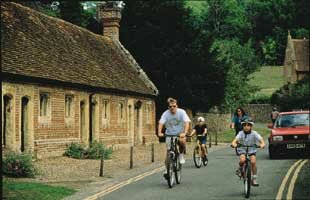 Read and understand the Highway Code. You are a vehicle with obligations like any other. You also have as much right to be on the road as other users!
Try planning your routes by using as many quiet, residential roads, cycle lanes and paths as possible. Try to use park, canal and river paths and bridleways but keep away from footpaths - bikes aren't allowed.
One of the first rules of safety on the roads is be seen - wear bright clothing (and consider wearing a helmet). Always have at least one reflector on your bike. The best place for reflectors is on the back of your pedals. The up and down of the pedals is very noticeable to motorists.
Riding in traffic requires constant alertness. Don't trust other road users - they may be asleep, distracted, or probably using their mobile phone! Look other road users directly in the eye so they register your presence - but still proceed with caution, you're often invisible. Know when to give way, don't shout abuse, unless you've got a good sprint. No matter how much you are in the right, it's always you that will come off worst! Be assertive in your cycling, assured in your actions, you will gain the respect of drivers.
Always ride in a straight line and indicate with hand signals if you intend to pull out to avoid something, or are turning.
If you have difficulty riding in a straight line, here are some tips: Keep your hands, wrists and elbows relaxed. Focus your eyes 10-20 feet ahead. Looking closer doesn't provide enough time to make smooth corrections when you see things in your way. Practice on an empty car park or deserted country road by riding with your wheels on painted lines. After you can ride without wavering, try it when you turn your head to look to the side and behind. When on roads, strive to ride 2-3 feet from the kerb. You will then always have some space to move if necessary, run less risk of being cut-up and will find it easier to avoid parked cars and potholes. Always overtake stationary traffic carefully - doors can appear from nowhere and vehicles can suddenly move off, unaware you are there. Watch out when approaching a left hand turn, particularly if a vehicle is coming up behind you. you'd be surprised how many motorists will overtake and cut straight across you - I have the bruises to prove it!
Your ears are one of your best early warning systems - so don't wear a Walkman whilst riding. When riding in rain, don't hesitate to use lights if you have them. Motorists' ability to see you can be severely reduced by the rain and mist on the windows. Brakes will require more time to stop you, so take care. Upgrading your brake blocks can sometimes improve matters; ask your CoBR member for advice.
As well as your brake blocks, the road surface will also be more slippery. Take care on metal road covers, painted lines and oil patches. Avoid doing anything suddenly, especially braking!!